
Shipping Management
Software
Shipping management software supports carrier rate shopping, label automation, tracking, and delivery notifications for high-volume logistics teams.
Shipping Management is best for
- High-volume parcel shipping operations
- Teams shipping across multiple carriers
- 3PLs recovering freight cost from clients
- Operations handling international documentation
Shipping Management Software
Shipping management software supports carrier rate shopping, label automation, tracking, and delivery notifications for high-volume logistics teams.
Unified workspace
Centralizes warehouse, inventory, orders, and client records.
Role permissions
Controls access for operators, supervisors, and clients.
Queue visibility
Shows inbound, picking, packing, and shipping workloads.
Status tracking
Tracks receiving, putaway, fulfillment, and delivery stages.
Audit history
Records edits, exceptions, and workflow changes.
Multi-site support
Manages warehouses and client sites consistently.
API connectivity
Integrates marketplaces, carriers, and billing systems.

Rate Shopping
Compare UPS, FedEx, USPS, and DHL options by cost, speed, and zone logic.
Multi-carrier quotes
Price a parcel across carriers before the label is bought.
Service level matching
Pick the cheapest service that still meets the delivery promise.
Zone and weight logic
Account for zone skips and weight breaks, not just base rate.
Dimensional weight
Price on billable weight so carton choice shows up in the quote.
Negotiated rates
Use your own contract pricing rather than published tariffs.
Surcharge awareness
Include residential, fuel, and remote-area surcharges in comparison.
Client rate cards
Quote at the rate the client is billed, not only your cost.
Label Automation
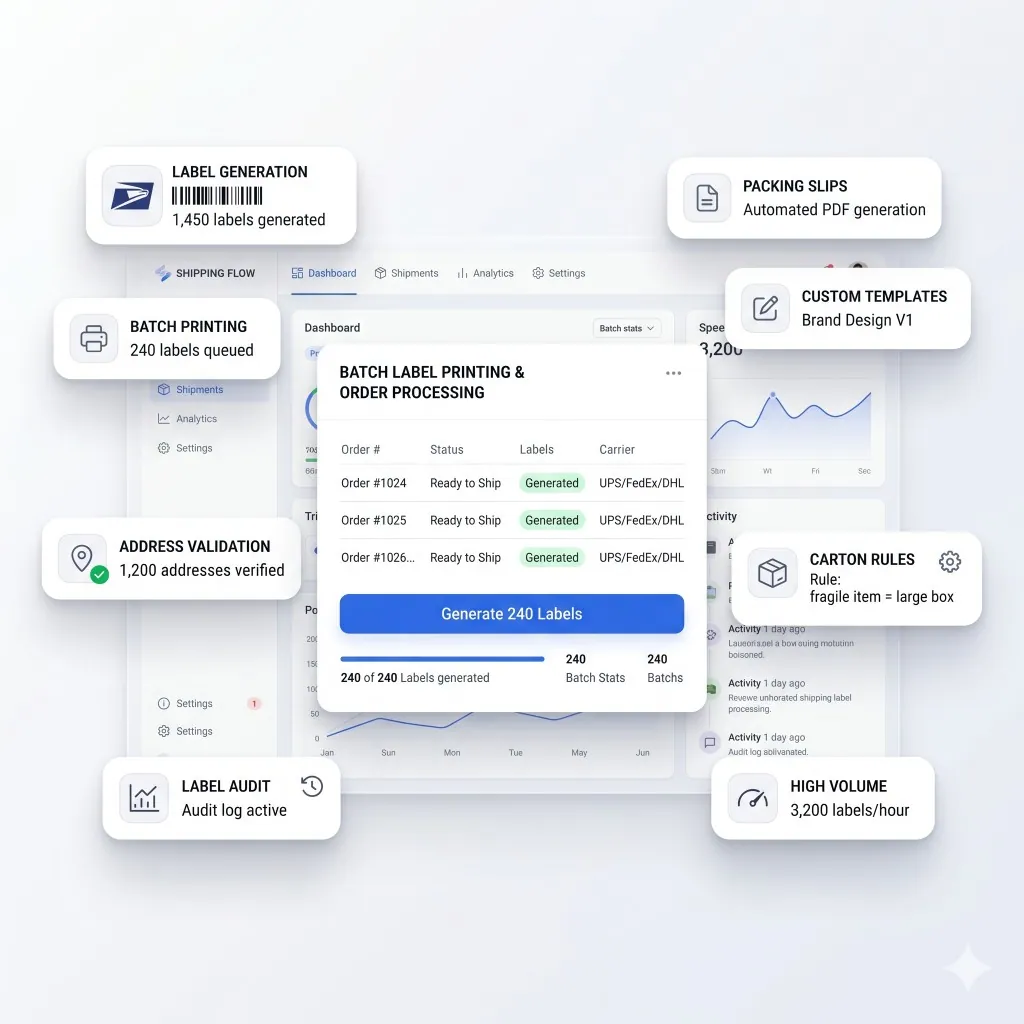
Batch print labels, validate addresses, and generate packing slips.
Address validation
Correct or flag a bad address before the label is bought.
Batch label printing
Produce labels for a whole wave rather than one at a time.
Packing slip rules
Include the documents each client and destination requires.
Customs documents
Generate the paperwork international parcels need up front.
Label voiding
Cancel unused labels so they are not billed as shipped.
Hazmat handling
Route restricted goods to services that accept them.
Printer routing
Send each label to the station that will apply it.

Shipment Tracking
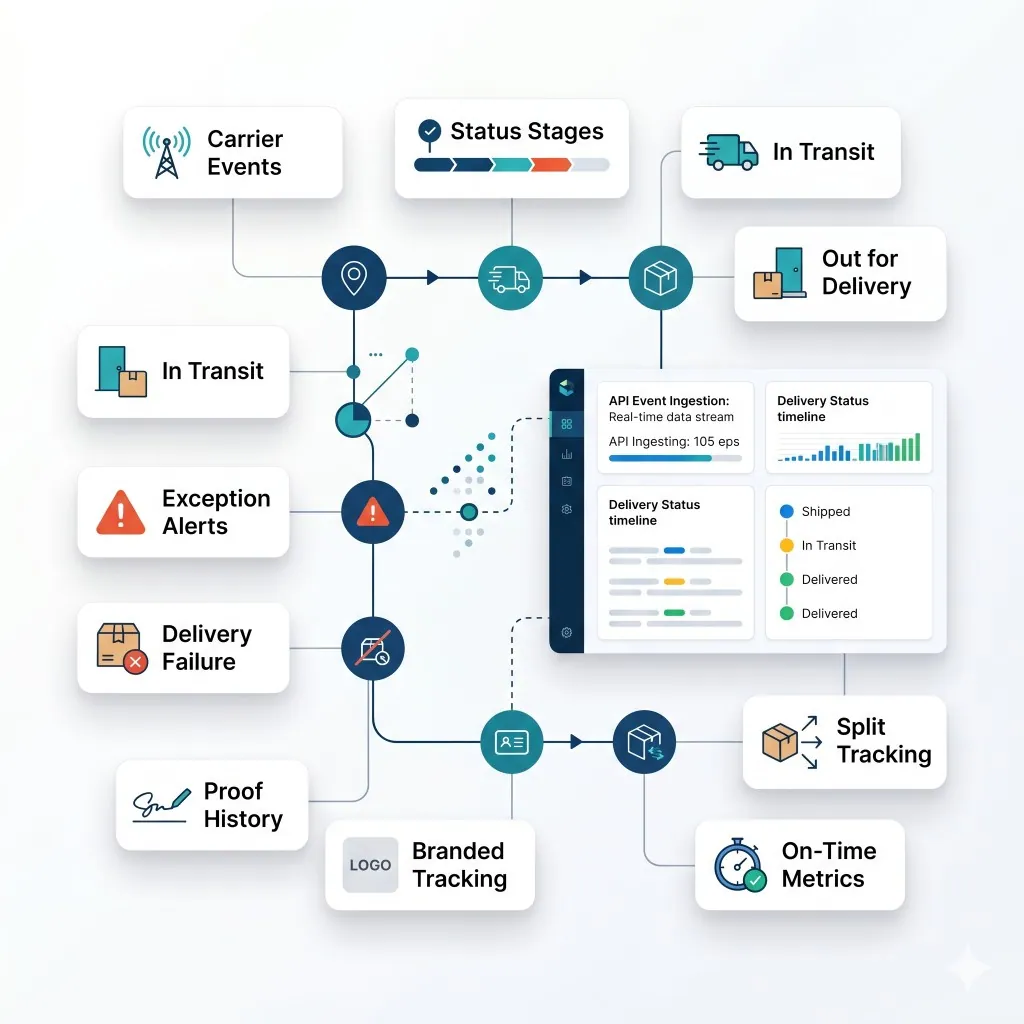
Follow carrier events, exceptions, and proof-of-delivery history.
Carrier event ingest
Collect scans from every carrier into one timeline.
Exception detection
Spot a parcel that has stopped moving before the client asks.
Delivery confirmation
Keep proof of delivery against the order and the client.
Lost parcel workflow
Open a claim on the evidence already collected.
Customer notifications
Send shipment and delivery updates on the client's behalf.
Transit time tracking
Compare actual transit against the service purchased.
Return tracking
Follow inbound returns with the same visibility as outbound.
Shipping Analytics
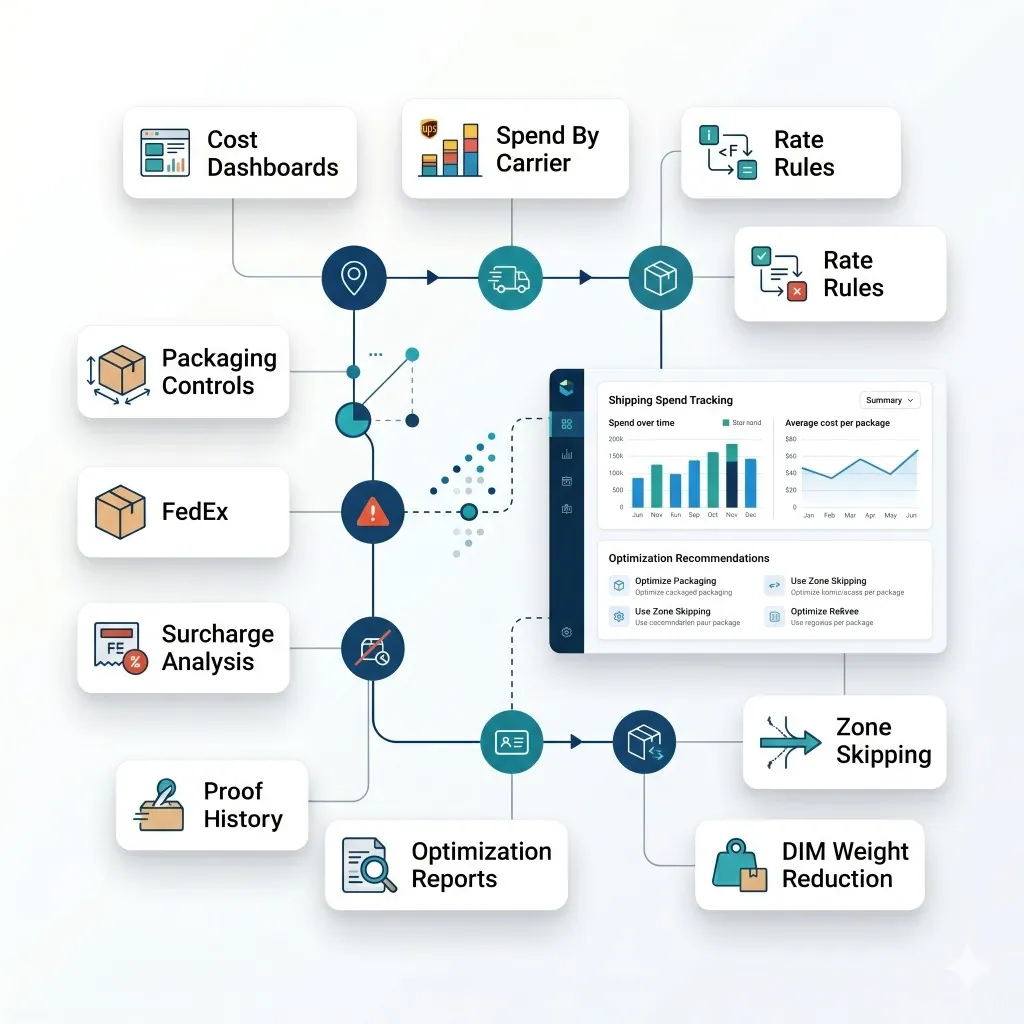
Analyze delivery cost, on-time performance, and notification outcomes.
Cost per parcel
Track landed shipping cost by client, service, and lane.
Carrier on-time rate
Measure each carrier against the service you paid for.
Surcharge leakage
Surface accessorial charges eroding the quoted rate.
Rate shop savings
Quantify what carrier selection saved versus a default.
Exception rate by lane
Find the routes where parcels reliably go wrong.
Claim recovery
Track the value of claims filed and actually recovered.
Billing reconciliation
Compare carrier invoices against what was quoted.
Why teams choose Shipping Management Software
Shipping management software supports carrier rate shopping, label automation, tracking, and delivery notifications for high-volume logistics teams.
Lower cost per parcel
Rate shopping on billable weight, not on list price.
Fewer undeliverable parcels
Addresses validated before a label is bought.
Exceptions found first
Stalled parcels surface before the client chases them.
Invoices that reconcile
Quoted rates compared against what the carrier actually billed.
Single-Carrier Shipping vs 1CA Shipping Management
A capability comparison, not a competitor list. This is how 1CA handles Shipping Management versus disconnected tools.
Single-Carrier Shipping
- One default carrier regardless of cost or destination
- Rates compared on base price, surcharges found on the invoice
- Bad addresses discovered when the parcel comes back
- Carrier invoices reconciled by hand, or not at all
1CA Shipping Management
- Multi-carrier quotes on billable weight before the label is bought
- Fuel, residential and remote-area surcharges in the comparison
- Address validation ahead of label purchase
- Quoted rate checked against what the carrier actually billed
Frequently Asked Questions
Answers to common operational inquiries.