
Manufacturing & Operations
Hub
BOM configuration, runrate checks & production queues.
Manufacturing Operations is best for
- Discrete manufacturers
- Make-to-order shops
- Light assembly operations
- Teams connecting BOM, inventory, and fulfillment
Platform Overview
Manufacturing operations platform centralizes production workflows, inventory, work orders, and compliance records to improve visibility and execution speed.
Unified operations
connects planning, inventory, quality, and fulfillment.
Role permissions
controls access for plants, teams, and supervisors.
Work order visibility
tracks status across lines and work centers.
Real-time updates
reduces delays and manual status reporting.
Audit trails
records edits, approvals, and process overrides.
Multi-site support
manages multiple plants and warehouses centrally.
API connectivity
integrates ERP, ecommerce, and finance systems.

Core Capabilities
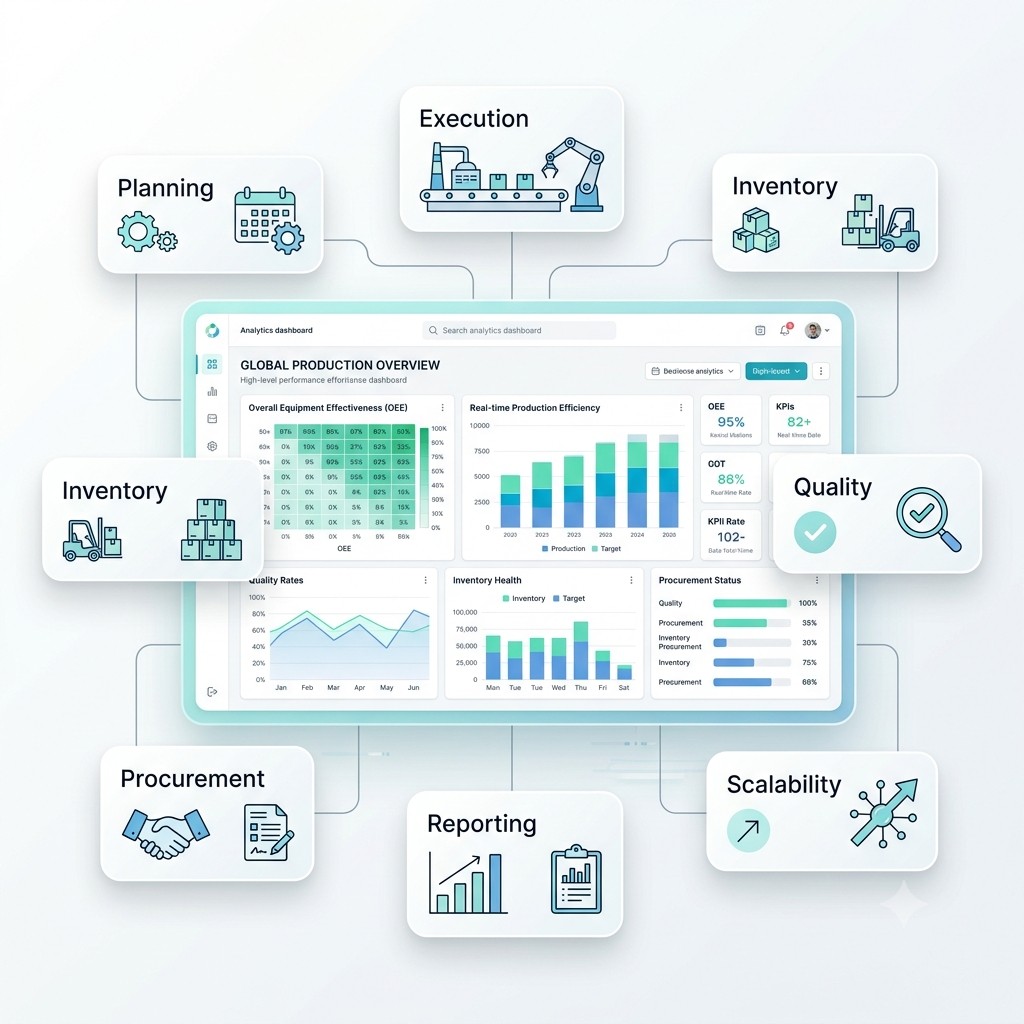
Manufacturing management software supports planning, execution, inventory control, quality workflows, procurement, and reporting for scalable manufacturing.
Production scheduling
plans work by capacity and priorities.
Material planning
ensures components are available on time.
BOM control
manages assemblies and versioned component lists.
Shop floor tracking
captures progress and downtime signals.
Quality checks
enforces inspection steps and nonconformance logs.
Procurement workflows
automates purchasing and supplier coordination.
Analytics dashboards
tracks cost, throughput, and performance metrics.
Production management
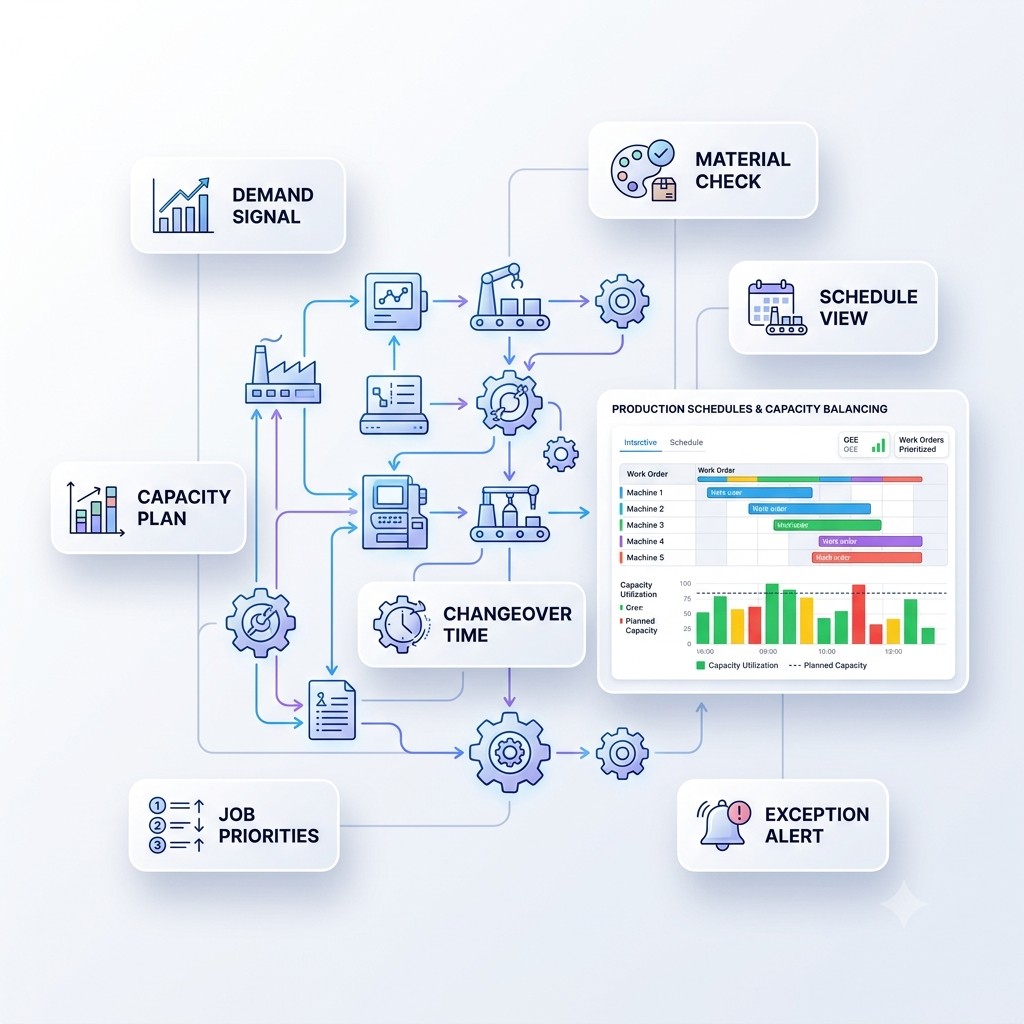
Production management software schedules jobs using capacity planning, demand signals, and work order priorities to meet deadlines reliably.
Production schedules
plans jobs by line and work center.
Capacity planning
balances labor, machines, and constraints.
Work order priorities
routes urgent orders ahead of backlog.
Material readiness
checks and blocks starts when parts are missing.
Changeover planning
reduces downtime between product runs.
Schedule visibility
shows upcoming jobs and commitments.
Exception alerts
flags late orders and constraint bottlenecks.

Materials Management
Manufacturing operations software tracks raw materials and components with consumption, replenishment, and traceability to prevent shortages and waste.
Raw material tracking
shows on-hand by location and lot.
Consumption tracking
records materials used per work order.
Reorder points
triggers purchase suggestions for key components.
Supplier lead times
supports realistic replenishment planning.
Substitutions rules
supports approved alternate components.
Scrap tracking
records scrap reasons and loss totals.
Inventory visibility
prevents stockouts during production runs.
BOM Management
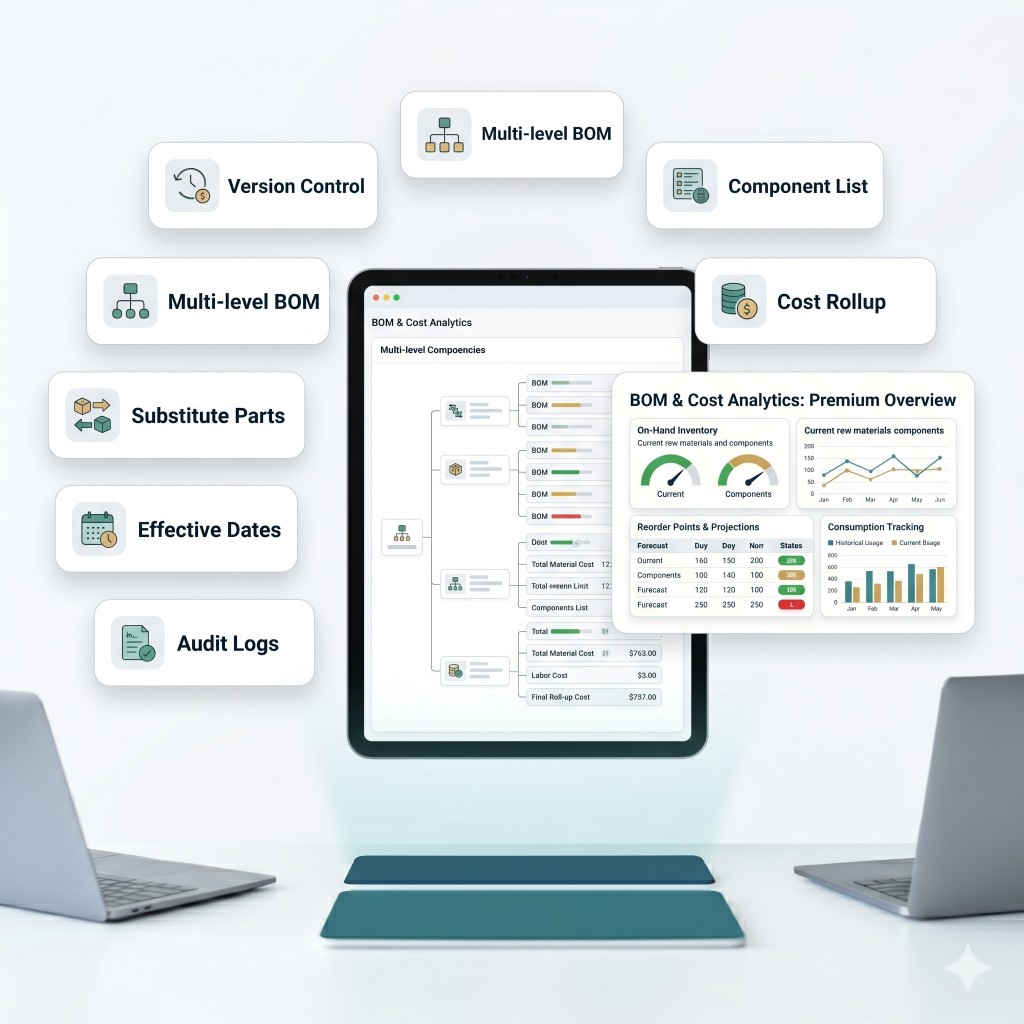
Manufacturing management software manages multi-level BOMs with version control, component dependencies, and cost rollups for accurate production.
BOM structure
supports multi-level assemblies and subassemblies.
Version control
tracks engineering changes and effective dates.
Component dependencies
enforces required components and quantities.
Cost rollups
calculates expected material cost per unit.
Kitting workflows
supports staged kits for production lines.
Substitute parts
supports approved alternates when shortages occur.
BOM audits
records changes and approvals for compliance.
Shop Floor Operations
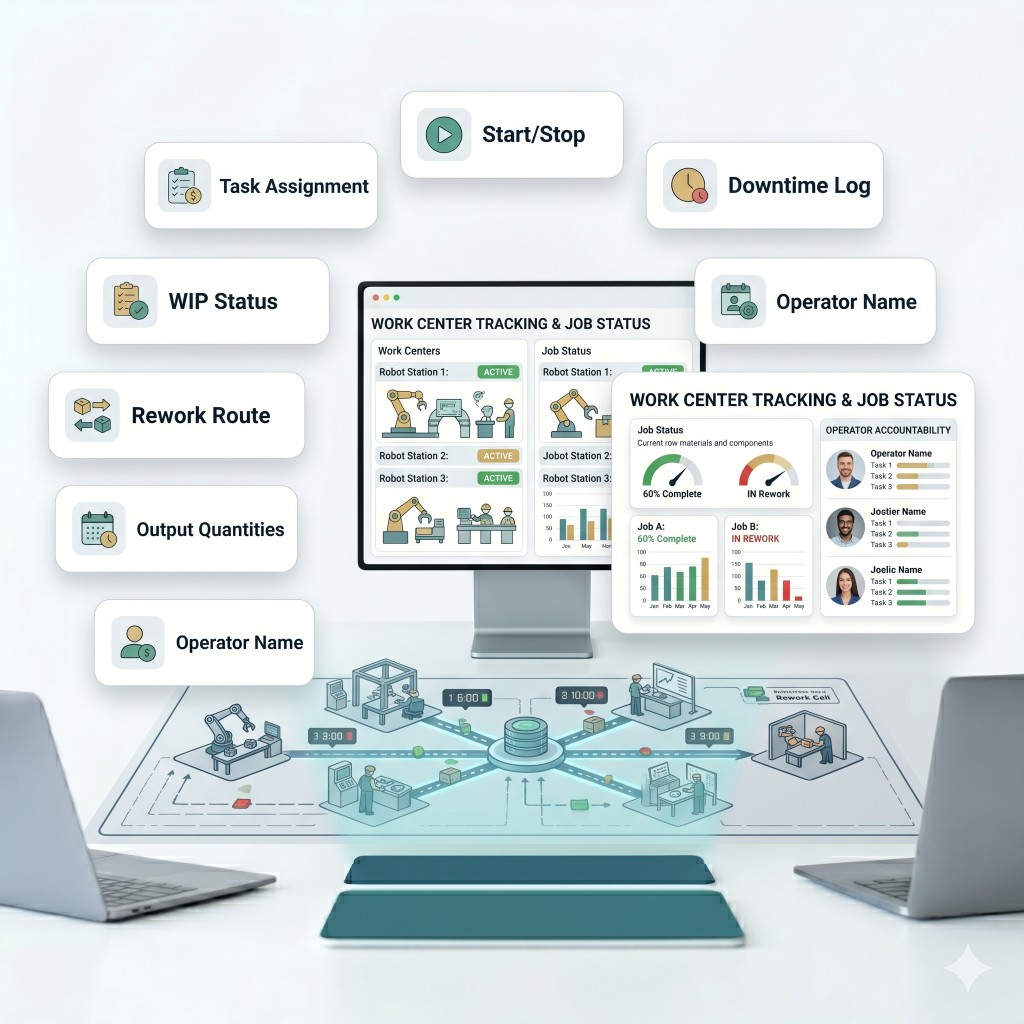
Manufacturing execution system tracks shop floor progress with task assignments, status updates, downtime logging, and operator accountability.
Work center
shows job status by workstation and line.
Operator assignments
assigns tasks by role and shift.
Start stop events
records timestamps for cycle time analysis.
Downtime reasons
logs stoppages with categorized root causes.
WIP visibility
shows work in progress by stage.
Rework workflows
routes rework tasks and retest steps.
Production output
records quantities completed and scrap.
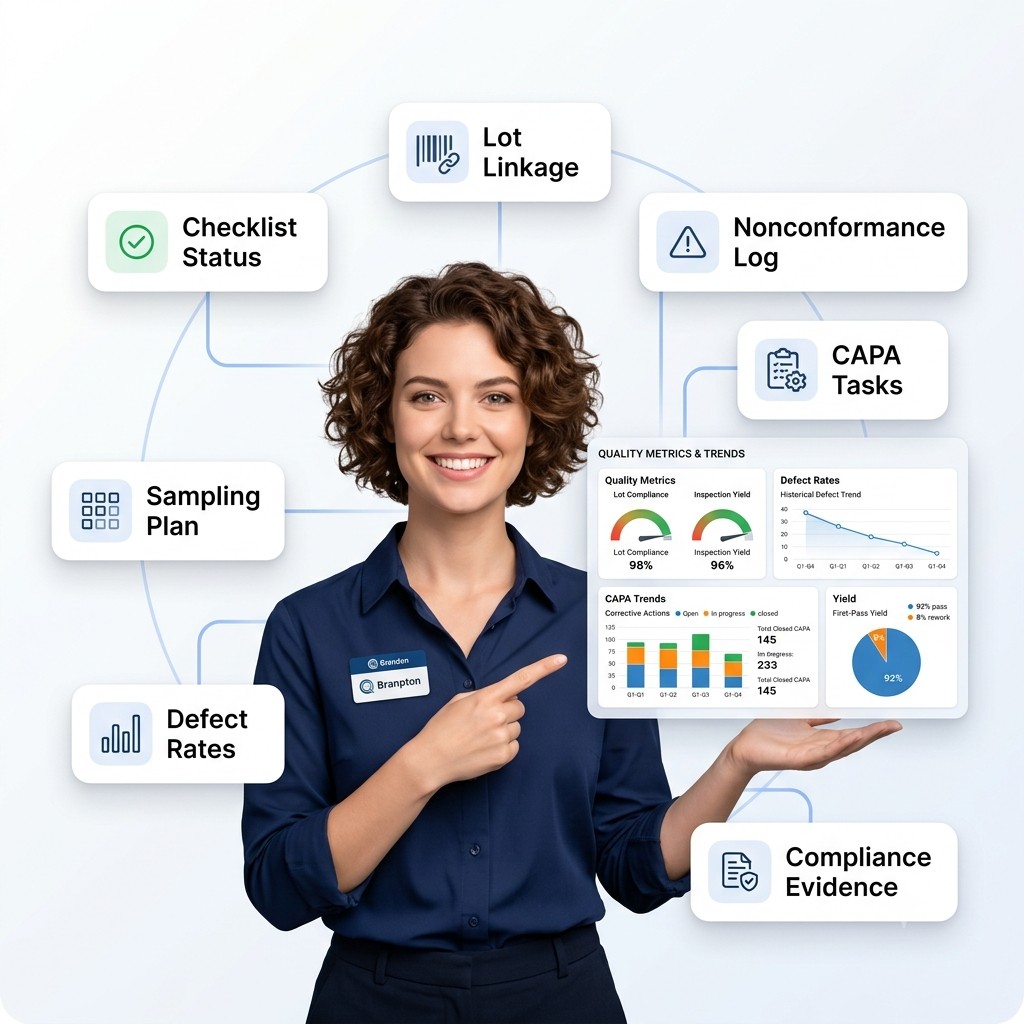
Quality Control
Manufacturing operations software supports quality control with inspections, nonconformance tracking, corrective actions, and audit-ready documentation.
Inspection checklists
enforces required checks by product and stage.
Lot traceability
links materials and finished goods for recalls.
Nonconformance logs
records defects and holds inventory safely.
Corrective actions
tracks CAPA tasks and closure evidence.
Sampling rules
supports sampling plans and inspection frequency.
Quality reports
shows defect rates and trend patterns.
Compliance logs
stores evidence for audits and certifications.
Supply Chain Management
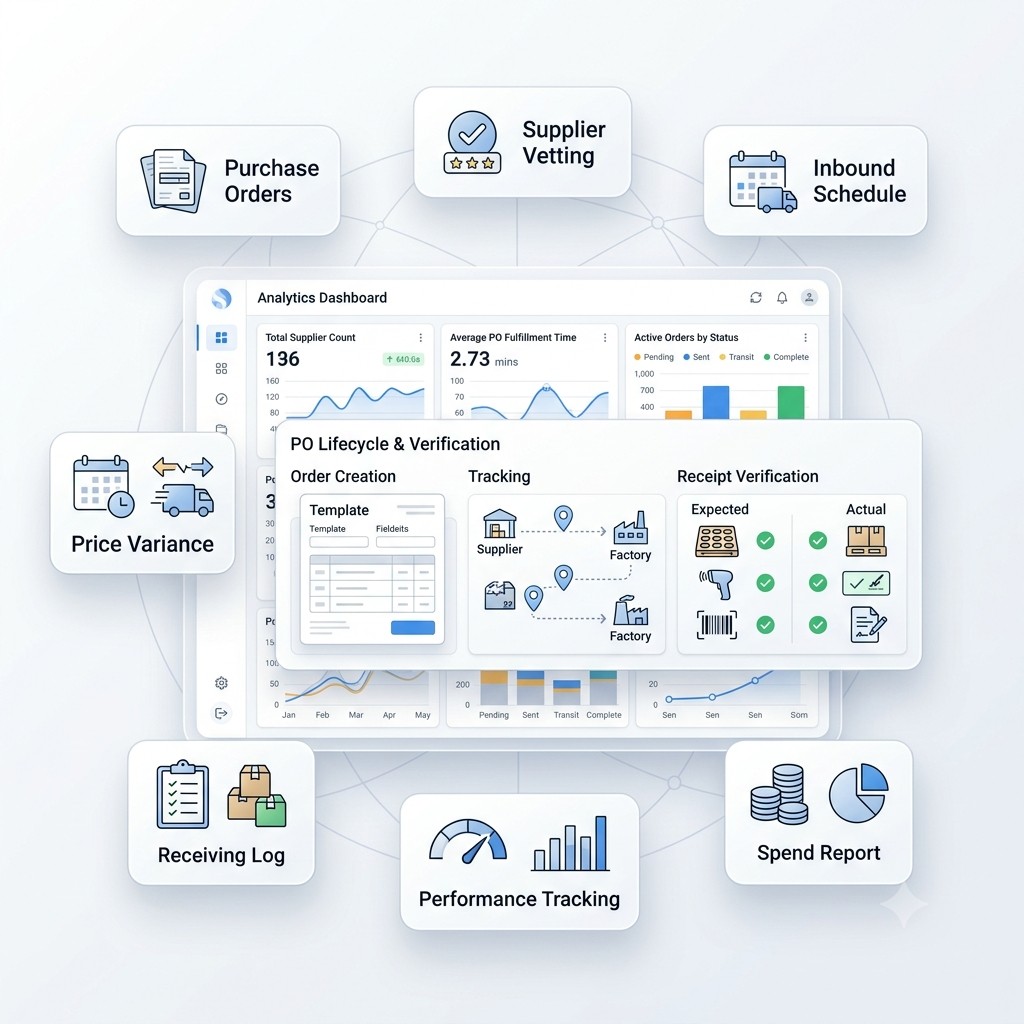
Manufacturing management software connects procurement and suppliers with purchase orders, inbound scheduling, and cost tracking for reliable supply.
Supplier records
stores vendors, terms, and lead times.
Purchase orders
creates and tracks PO status and receipts.
Inbound scheduling
plans deliveries to avoid line stoppages.
Price variance
flags cost changes impacting margin.
Supplier performance
tracks on-time delivery and quality trends.
Receiving verification
validates quantities and discrepancies quickly.
Spend reporting
tracks spend by vendor and category.
Manufacturing Analytics
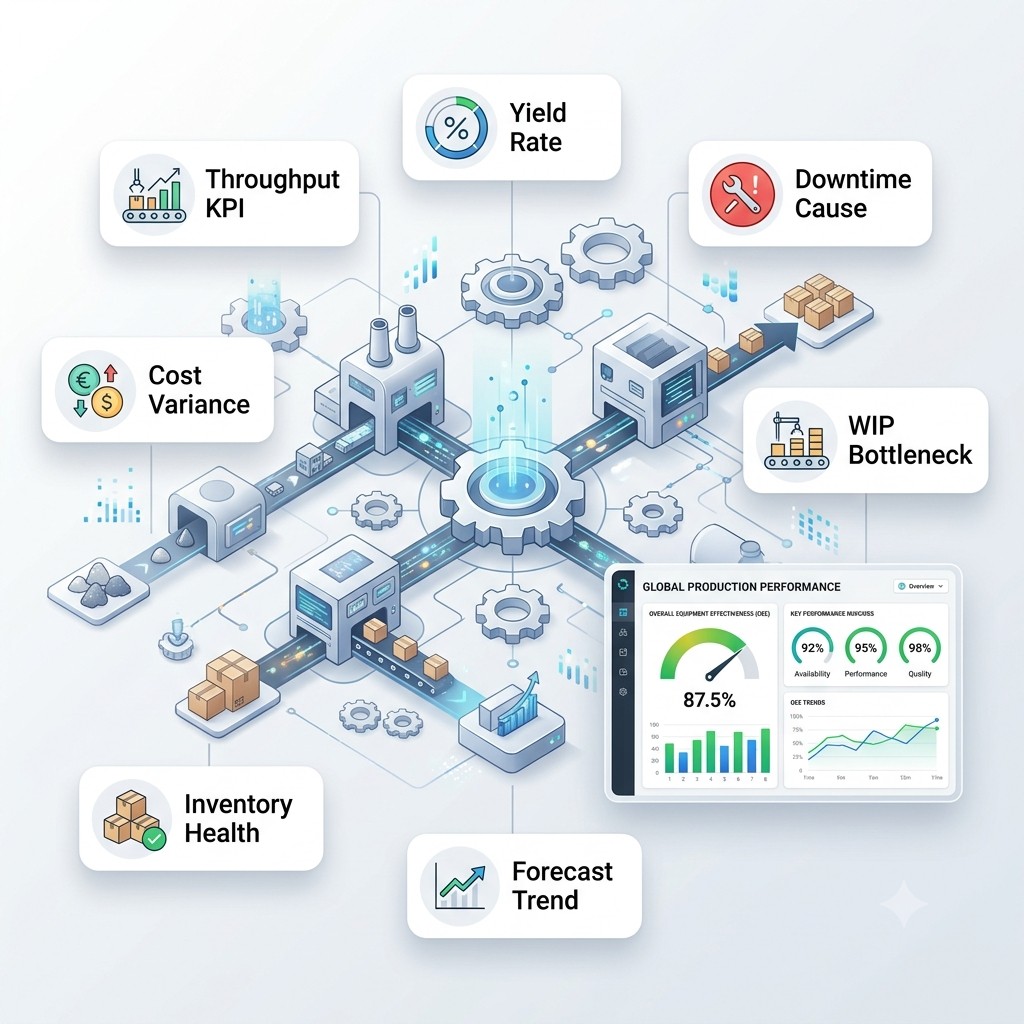
Manufacturing operations platform analytics measures throughput, costs, downtime, yield, and inventory health to improve performance.
Throughput KPIs
tracks output by line and work center.
Yield analytics
measures scrap rates and first pass yield.
Downtime dashboards
shows top downtime reasons and impact.
Cost insights
tracks material cost and variance by job.
WIP analytics
tracks bottlenecks and stage cycle times.
Inventory health
shows stockout risk and excess materials.
Forecast trends
supports demand and capacity planning decisions.
Seven Core Benefits of Manufacturing Operations
Improve on-time production, reduce shortages and errors, increase shop floor visibility, and strengthen quality, supply reliability, and performance with manufacturing operations software.
Improve on-time
Improve on-time production with manufacturing operations software using capacity scheduling, work order priorities, and material readiness checks.
Reduce shortages
Reduce shortages with materials management tracking consumption, reorder points, supplier lead times, and substitutions rules.
Reduce errors
Reduce errors with BOM management using version control, component dependencies, and cost rollups tied to production.
Increase shop
Increase shop floor visibility with manufacturing execution system tracking WIP, downtime reasons, and operator accountability.
Improve quality
Improve quality with inspections, nonconformance workflows, corrective actions, and audit-ready compliance documentation.
Improve supply
Improve supply reliability with procurement workflows, inbound scheduling, price variance alerts, and supplier performance reporting.
Improve performance
Improve performance with manufacturing analytics dashboards tracking throughput, yield, downtime, and cost variance trends.
Traditional Manufacturing Tools vs 1CA Manufacturing Operations
A capability comparison, not a competitor list. This is how 1CA handles Manufacturing Operations versus disconnected tools.
Traditional Manufacturing Tools
- BOMs and work orders in a shop-floor system only
- Inventory and purchasing updated after production finishes
- No shared view of materials, orders, and shipments
- Manual status updates between planning and the floor
1CA Manufacturing Operations
- Manufacturing operations connected to inventory and purchasing
- Work-order planning that consumes materials as work completes
- Fulfillment and demand signals on the same platform
- One record for production status, stock, and order readiness
Frequently Asked Questions
Answers to common operational inquiries.