

Executive Summary
Enterprise Resource Planning (ERP) systems are at a turning point. For decades, they have served as the backbone of business operations reliable, structured, and essential. Yet the demands placed on organizations today are fundamentally different from those of the past. Speed, adaptability, and intelligent decision-making are no longer competitive advantages; they are baseline requirements.
In this context, traditional ERP systems designed primarily to record and organize data are no longer sufficient. Businesses need systems that not only capture information, but also interpret it, learn from it, and act on it.
1XA ERP has been built to meet this moment. With artificial intelligence embedded at its core, it represents a shift from static systems of record to dynamic systems of intelligence and action. This paper explores that shift and outlines how 1XA ERP enables organizations to operate with greater clarity, responsiveness, and autonomy.
The Evolution of ERP
To understand the significance of this shift, it is useful to reflect on how ERP systems have evolved.
Early ERP platforms were designed to centralize information finance, inventory, procurement into a single system. Their value was rooted in consistency and control. Over time, reporting capabilities improved, enabling organizations to extract insights from their data.
However, these insights have traditionally been retrospective. Leaders could see what had already happened, but acting on that information still required time, interpretation, and manual effort. In an increasingly complex and fast-moving environment, this lag creates risk. It hinders growth and costs businesses time, effort, and money.
The modern enterprise requires more than visibility. It requires foresight and responsiveness. ERP systems must now anticipate outcomes, surface recommendations, and increasingly, execute decisions. This marks the transition from systems of record to systems of intelligence and now, to systems of action.
AI as the Foundation, Not the Feature
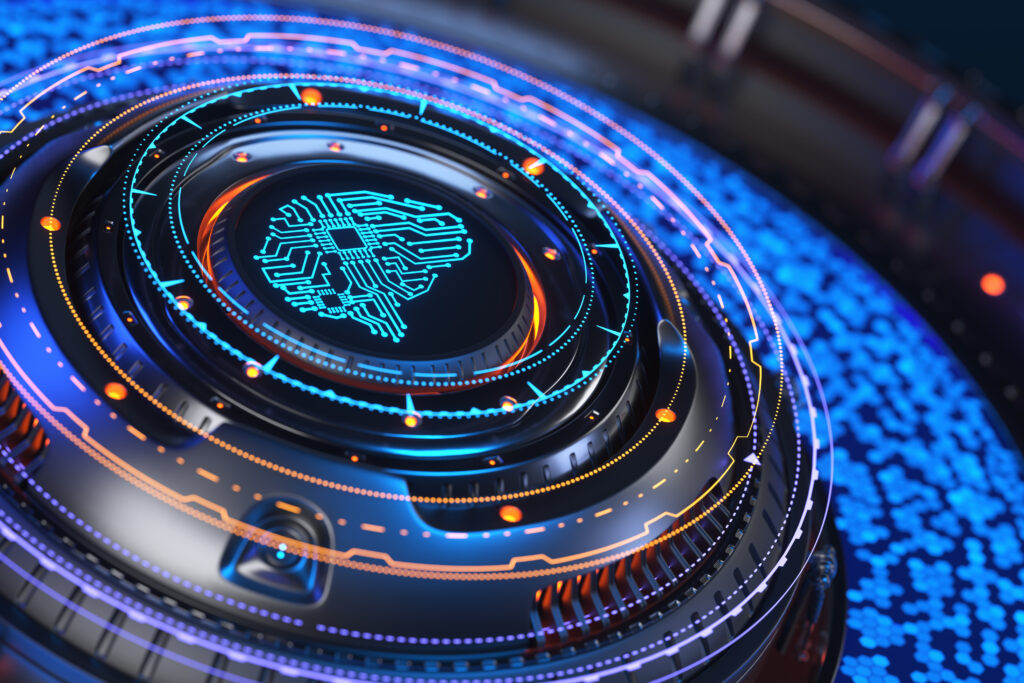
Many ERP platforms today incorporate artificial intelligence in limited ways, often as an added layer on top of existing infrastructure. While this can enhance specific functions, it does not fundamentally change how the system operates.
1XA ERP takes a different approach. Artificial intelligence is not an extension of the platform; it is part of its architecture. This distinction is critical. By embedding AI at the core, 1XA ERP enables intelligence to flow through every process, rather than being confined to isolated features.
In practice, this means that forecasting is no longer a periodic exercise, but a continuous process informed by live data. Operational risks are not simply reported after the fact, but identified as they emerge. Decision support is delivered in context, within the workflows where actions are taken not in separate dashboards that require interpretation.
This integration allows the system to move beyond supporting decisions to actively shaping them.
Toward Autonomous Operations

One of the most significant developments in enterprise technology is the emergence of AI-driven agents capable of managing routine and complex tasks. Within ERP, this introduces the possibility of semi-autonomous operations.
1XA ERP incorporates these capabilities in a way that is both practical and controlled. Routine processes such as transaction matching, replenishment planning, or exception handling can be managed by intelligent agents that continuously learn and improve. These agents operate within defined parameters, ensuring that governance and oversight remain intact.
The result is not the removal of human decision-making, but its elevation. By reducing the need for manual intervention in repetitive processes, organizations can focus their expertise on strategy, innovation, and growth.
A Composable, Cloud-Native Architecture

As enterprise systems evolve, flexibility has become as important as functionality. Organizations no longer want monolithic platforms that require large-scale, infrequent transformations. Instead, they need systems that can adapt incrementally as business needs change.
1XA ERP is designed as a cloud-native, composable platform. This allows organizations to deploy capabilities in a modular way, integrating with existing systems and expanding over time. The architecture supports rapid innovation without the disruption traditionally associated with ERP implementations.
This composability also reflects a broader shift in enterprise technology: the move from single, all-encompassing systems to interconnected ecosystems. 1XA ERP is built to operate within this reality, serving as both a foundation and a unifying layer.
Industry Context and Relevance

No two industries operate in exactly the same way, and ERP systems must reflect this diversity. A one-size-fits-all approach often leads to inefficiencies and extended implementation timelines.
1XA ERP addresses this by incorporating industry-specific intelligence into its design. Workflows, data models, and AI capabilities can be aligned to the requirements of particular sectors, reducing the gap between system capabilities and real-world operations.
This alignment not only accelerates deployment but also enhances the relevance and accuracy of the insights generated by the system.
Real-Time Visibility in a Complex World

Global supply chains, shifting market conditions, and evolving regulatory environments have made real-time visibility essential. Organizations must be able to understand what is happening across their operations at any given moment.
1XA ERP provides a unified view of the enterprise, connecting data across functions and presenting it in a coherent, actionable form. This is not simply about transparency; it is about enabling timely and informed decisions.
By combining real-time data with predictive intelligence, the platform allows organizations to move from reacting to events to anticipating them.
From Automation to Orchestration

Automation has long been a goal of ERP systems, but it has often been limited to discrete tasks. The next stage of evolution is orchestration the coordination of entire processes across functions and systems.
1XA ERP enables this through the integration of AI, workflow management, and analytics. Processes such as order-to-cash or procure-to-pay are no longer a series of isolated steps, but interconnected flows that adapt dynamically to changing conditions.
This shift reduces friction, improves efficiency, and creates a more resilient operational model.
Human-Centered Design

Despite the increasing role of automation and AI, the success of any ERP system ultimately depends on its users. Adoption, usability, and accessibility remain critical.
1XA ERP has been designed with this in mind. Its interface emphasizes clarity and ease of use, while mobile access ensures that decision-making is not confined to a single location. Low-code capabilities allow organizations to tailor the system to their needs without extensive technical overhead.
The goal is to make advanced functionality accessible, enabling users at all levels of the organization to engage with the system effectively.
Trust, Security, and Governance

As ERP systems become more intelligent and more autonomous, questions of trust and control become increasingly important. Organizations must be confident not only in the accuracy of their data, but also in the decisions influenced or executed by the system.
1XA ERP incorporates governance and security as foundational elements. Data management, compliance, and transparency are built into the platform, ensuring that organizations retain control over their operations and their information.
This is particularly important in an era where data privacy and regulatory requirements continue to evolve.
Continuous Evolution

The traditional model of ERP implementation large, infrequent, and disruptive is giving way to a more continuous approach. Systems must evolve alongside the organizations they support.
1XA ERP is designed as a living platform. Updates, enhancements, and improvements are delivered on an ongoing basis, while embedded AI models continuously learn from new data. This ensures that the system remains relevant and effective over time.
Next-Gen ERP
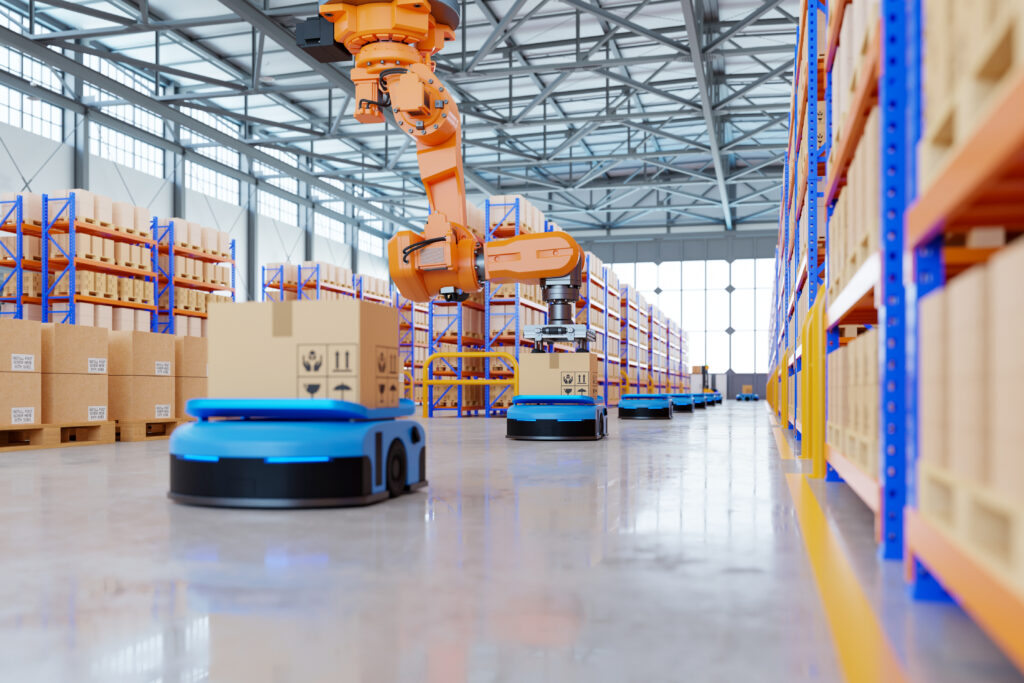
The role of ERP within the enterprise is changing. What was once a tool for managing operations is becoming a platform for driving them. Intelligence, automation, and adaptability are now central to this role.
1XA ERP reflects this transformation. By embedding AI at its core and combining it with a flexible, modern architecture, it enables organizations to operate with greater insight, efficiency, and agility.
In a business environment defined by constant change, the ability to move from understanding to action is critical. 1XA ERP is designed to make that transition not only possible, but seamless.
About 1XA ERP
1XA ERP is a next-generation enterprise platform built to unify data, intelligence, and execution. With artificial intelligence at its foundation, it supports organizations in navigating complexity and unlocking new levels of operational performance.
For more information, please contact the 1XA ERP team.

 English
  Spanish